


Minotaur
Monthly
Monthly
December 2025
.png)




.png)


.png)
.png)

.png)

.png)

.png)

.png)


.png)






Interested in Minotaur Capital?
Subscribe to receive monthly performance updates and quarterly commentary.
© 2024 Minotaur Capital Management Pty Ltd (Minotaur). All rights reserved. See our Privacy Policy.
Minotaur Capital Management Pty Ltd (ABN 17 672 819 975) is a corporate authorised representative (CAR 1308265) of Minotaur Licensing Pty Ltd (ABN 86 674 743 198) (AFSL 557080). The Minotaur Global Opportunities Fund is issued by K2 Asset Management Ltd (ABN 95 085 445 094, AFSL 244393), a wholly owned subsidiary of K2 Asset Management Holdings Ltd (ABN 59 124 636 782).
The information in this website (the Information) has been prepared by Minotaur.
For keyboard shortcuts, press ?
This information is for general information only and is not an offer for the purchase or sale of any financial product or services. The Information has been prepared for investors who qualify as wholesale clients under section 761G of the Corporations Act 2001 (Cth) (Corporations Act) or to any other person who is not required to be given a regulated disclosure document under the Corporations Act. The Information is not intended to provide you with financial or tax advice and does not take into account your objectives, financial situation or needs. Although we believe that the Information is correct, no warranty of accuracy, reliability or completeness is given, except for liability under statute which cannot be excluded. Please note that past performance may not be indicative of future performance and that no guarantee of performance, the return of capital or a particular rate of return is given Minotaur, K2 Asset Management or any other person. To the maximum extent possible, Minotaur, K2 Asset Management or any other person do not accept any liability for any statement in this Information.
Minotaur Capital Management Pty Ltd (ABN 17 672 819 975) is a corporate authorised representative (CAR 1308265) of Minotaur Licensing Pty Ltd (ABN 86 674 743 198) (AFSL 557080). The Minotaur Global Opportunities Fund is issued by K2 Asset Management Ltd (ABN 95 085 445 094, AFSL 244393), a wholly owned subsidiary of K2 Asset Management Holdings Ltd (ABN 59 124 636 782).
The information in this website (the Information) has been prepared by Minotaur.
For keyboard shortcuts, press ?
This information is for general information only and is not an offer for the purchase or sale of any financial product or services. The Information has been prepared for investors who qualify as wholesale clients under section 761G of the Corporations Act 2001 (Cth) (Corporations Act) or to any other person who is not required to be given a regulated disclosure document under the Corporations Act. The Information is not intended to provide you with financial or tax advice and does not take into account your objectives, financial situation or needs. Although we believe that the Information is correct, no warranty of accuracy, reliability or completeness is given, except for liability under statute which cannot be excluded. Please note that past performance may not be indicative of future performance and that no guarantee of performance, the return of capital or a particular rate of return is given Minotaur, K2 Asset Management or any other person. To the maximum extent possible, Minotaur, K2 Asset Management or any other person do not accept any liability for any statement in this Information.
The Minotaur Global Opportunities Fund rose 2.2% in December faring better than the MSCI ACWI (net AUD) index which declined 0.6%. The standout contributor was Australian coronary artery disease diagnostics company, Artrya. During the month, Artrya announced that its third US foundation customer had signed a five-year commercial agreement for its Salix platform. This marks a critical milestone: all three foundation US customers have now been successfully converted to commercial contracts, validating the company’s post-FDA commercial strategy following approval of its SCA product in March 2025 and SCP product in August 2025.
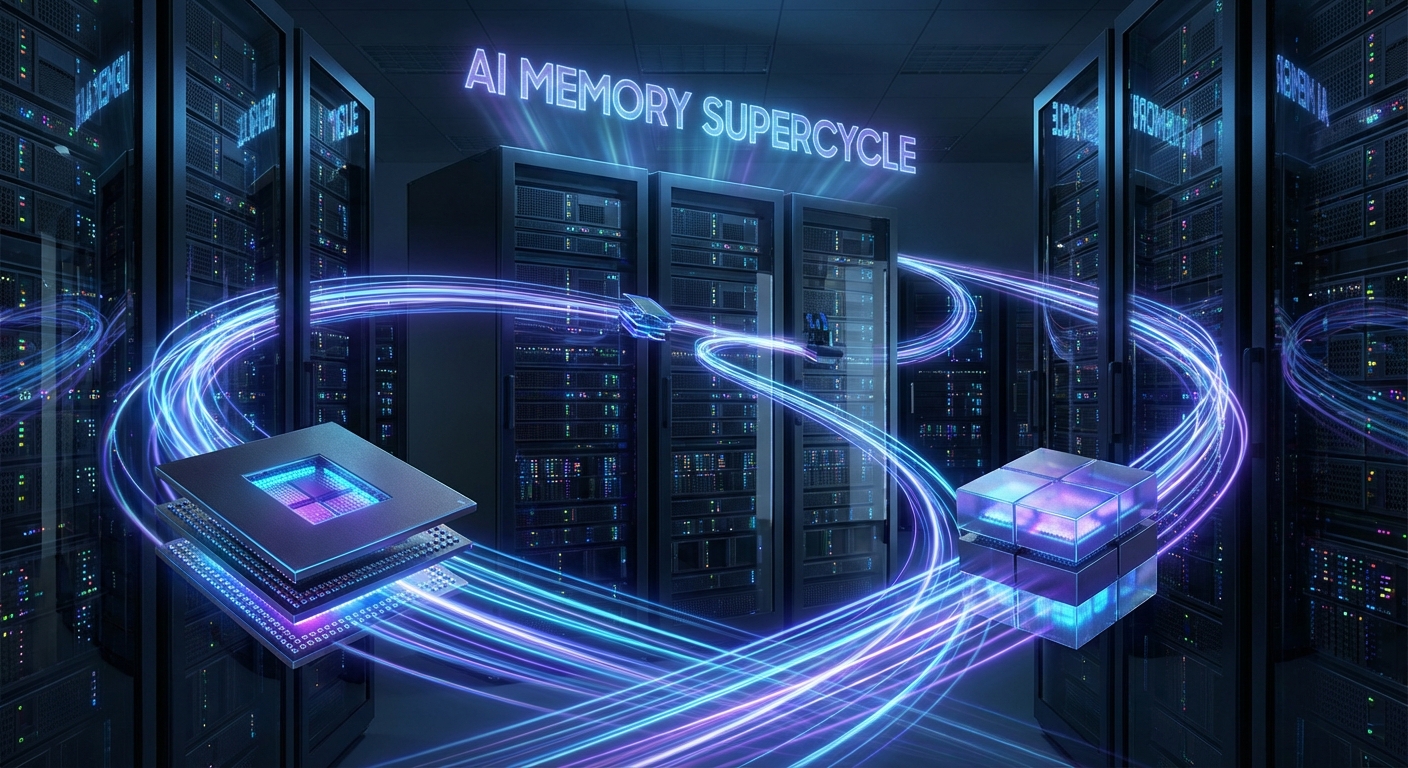
The Memory Supercycle
From a sector perspective, one of our most impactful positions this month was a pairs trade in memory, going long the memory makers and short the memory takers. Memory is emerging as one of the clearest beneficiaries of the AI boom. Large-scale AI models require dramatically higher memory bandwidth and capacity, and we are already seeing DRAM prices, particularly HBM and DDR5, rise sharply as demand accelerates. Supply, meanwhile, remains constrained. We initiated our position in Micron in early October as pricing began to inflect, and own two of the three global suppliers (Micron and SK Hynix). The industry has been far more disciplined about capacity expansion than in past cycles, and greenfield additions take years to bring online, further tightening supply. With AI demand likely to remain structurally strong, we believe current pricing strength is more durable than the market expects.
The flip side of this dynamic is felt by the memory takers, PC and server OEMs, which sit on the wrong side of the AI-driven memory supercycle. Memory typically represents 10–15% of their bill of materials, and when such a large cost line inflates rapidly, margins come under meaningful pressure. Our work suggests that a sustained doubling of DRAM prices can shave several hundred basis points off gross margins for companies such as Lenovo, ASUS, HP and Dell, even after accounting for pricing actions and mix improvements.
Shipping Into Oversupply
Another notable trade this month was the initiation of short positions in select Japanese shipping stocks. We believe container shipping is entering a period of severe structural oversupply that is not yet reflected in equity prices. The industry remains a textbook example of how long lead times and easy access to capital erode returns. When rates rise, management teams reinvest aggressively, locking in multi-year ship orders under non-cancellable contracts. The result is a familiar pattern: brief periods of elevated profitability followed by prolonged oversupply, falling rates and losses. This cycle played out after the pre-GFC ordering boom and is repeating following the pandemic, initially driven by port congestion and subsequently extended by Red Sea diversions. Those diversions are now ending: CMA CGM announced in December that its INDAMEX service will fully return to the Suez Canal in January, and other major carriers are expected to follow. A normalisation of routing would release roughly 10% of effective fleet capacity into a market where the orderbook already stands at 33% of the existing fleet – the highest level since 2010.
Evolving Our AI Stack
On the technology front, we’ve spoken extensively about our disciplined framework for testing and evaluating large language models across different use cases. One of the challenges is how quickly the frontier shifts. Recently, we’ve been testing Codex versus Claude for writing and research tasks and have found that Claude (Opus 4.5) is currently delivering superior results. As a result, we’ve migrated a meaningful portion of our internal research workflows accordingly.
Our work on AI infrastructure has also led us to examine the water consumption of data centres – a topic with implications for hyperscaler capex, utility planning, and the social licence for continued AI expansion. We have put together a detailed analysis (and used it to test out Anthropic vs. OpenAI) – email us if you’d like a copy.
Discord and Harmony
After a couple of tougher months, it was encouraging to finish the year back on track, applying lessons around conviction and decisiveness. As Plutarch observed, “Medicine, to produce health, must examine disease; and music, to create harmony, must investigate discord.” The same is true in investing. It is by interrogating our process during difficult periods that we are able to produce months like December where we outperformed meaningfully in a down market.