



Minotaur
Monthly
Monthly
August 2025
.png)

.png)


.png)

.png)

.png)

.png)
.png)
.png)


.png)




Interested in Minotaur Capital?
Subscribe to receive monthly performance updates and quarterly commentary.
© 2024 Minotaur Capital Management Pty Ltd (Minotaur). All rights reserved. See our Privacy Policy.
Minotaur Capital Management Pty Ltd (ABN 17 672 819 975) is a corporate authorised representative (CAR 1308265) of Minotaur Licensing Pty Ltd (ABN 86 674 743 198) (AFSL 557080). The Minotaur Global Opportunities Fund is issued by K2 Asset Management Ltd (ABN 95 085 445 094, AFSL 244393), a wholly owned subsidiary of K2 Asset Management Holdings Ltd (ABN 59 124 636 782).
The information in this website (the Information) has been prepared by Minotaur.
For keyboard shortcuts, press ?
This information is for general information only and is not an offer for the purchase or sale of any financial product or services. The Information has been prepared for investors who qualify as wholesale clients under section 761G of the Corporations Act 2001 (Cth) (Corporations Act) or to any other person who is not required to be given a regulated disclosure document under the Corporations Act. The Information is not intended to provide you with financial or tax advice and does not take into account your objectives, financial situation or needs. Although we believe that the Information is correct, no warranty of accuracy, reliability or completeness is given, except for liability under statute which cannot be excluded. Please note that past performance may not be indicative of future performance and that no guarantee of performance, the return of capital or a particular rate of return is given Minotaur, K2 Asset Management or any other person. To the maximum extent possible, Minotaur, K2 Asset Management or any other person do not accept any liability for any statement in this Information.
Minotaur Capital Management Pty Ltd (ABN 17 672 819 975) is a corporate authorised representative (CAR 1308265) of Minotaur Licensing Pty Ltd (ABN 86 674 743 198) (AFSL 557080). The Minotaur Global Opportunities Fund is issued by K2 Asset Management Ltd (ABN 95 085 445 094, AFSL 244393), a wholly owned subsidiary of K2 Asset Management Holdings Ltd (ABN 59 124 636 782).
The information in this website (the Information) has been prepared by Minotaur.
For keyboard shortcuts, press ?
This information is for general information only and is not an offer for the purchase or sale of any financial product or services. The Information has been prepared for investors who qualify as wholesale clients under section 761G of the Corporations Act 2001 (Cth) (Corporations Act) or to any other person who is not required to be given a regulated disclosure document under the Corporations Act. The Information is not intended to provide you with financial or tax advice and does not take into account your objectives, financial situation or needs. Although we believe that the Information is correct, no warranty of accuracy, reliability or completeness is given, except for liability under statute which cannot be excluded. Please note that past performance may not be indicative of future performance and that no guarantee of performance, the return of capital or a particular rate of return is given Minotaur, K2 Asset Management or any other person. To the maximum extent possible, Minotaur, K2 Asset Management or any other person do not accept any liability for any statement in this Information.
The Minotaur Global Opportunities Fund gained 2.1% in August vs. the MSCI All Country World Index (AUD), which rose 0.8%.
Macro Backdrop: Tariffs, Tensions, and Tumult
The global stage remains unpredictable, characterised more like a telenovela than textbook economics. The US administration’s tariff policies continue to oscillate, leaving corporates, regulators, and investors struggling to decipher the rules of engagement. August was marked by US President Trump’s 50% tariff on Indian goods, leading to Prime Minister Modi’s first visit to China in seven years, and postal services around the globe halting shipments to the US until further clarity emerges. The drama peaked when a US appeals court once again deemed the tariffs illegal, compounding uncertainty for international trade.
Meanwhile, the US Bureau of Labor Statistics reported grim employment numbers: the jobless rate climbed to 4.2%, and three-month average payroll gains were revised down from 150,000 to just 35,000. In a now-familiar pattern, Trump fired the Bureau of Labor Statistics (BLS) head (following those awful job numbers), while also attempting to dismiss Fed Governor Lisa Cook, and RFK Jr targeted CDC leadership… which, it goes without saying, are all unprecedented moves that undermine institutional credibility.
Coupled with the largest spike in wholesale inflation in three years, investors are increasingly attuned to the risk of stagflation in the US. Ironically, these distortions have meant that Trump is inadvertently making international stocks “great again”, with international equity markets on pace to outperform the broad US stock benchmark for the first time since 2022.
Market machinations: The balance between Hype and Hard Data
August showcased the market’s paradox: exuberant optimism for innovation on the one hand, and deep unease about macro fragility on the other. Figma’s 250% surge on its public debut - the largest first-day jump for a US-listed IPO in three decades - reminded investors that capital still rushes to genuine disruption. Palantir also reached fresh highs before fading later in the month, evidence of how quickly enthusiasm can turn to hesitation.
Healthcare innovation told a more complex story. Our GLP-1 pairs trade (Long Chugai/Long Eli Lilly/Short Novo Nordisk) was a detractor when Novo’s trial data revealed its oral treatment achieved 17% weight loss vs. Lilly and Chugai’s 12%. That sparked a short-term setback, but we see structural reasons for optimism on the Chugai/Lilly side: the orforglipron pill can be taken with or without food, a critical advantage in real-world adherence; production costs are lower as a small molecule vs. Novo’s peptide approach; and Lilly has built a large amount of inventory, ensuring supply reliability. Combined with its gold-standard injectable tirzepatide and next-generation triple agonist retatrutide, Lilly remains positioned to capture a meaningful share of what we believe will be a north of $100 billion oral obesity market. Still, with Novo slashing Ozempic’s out-of-pocket price to $499 a month, we closed our short tactically at a healthy profit, keeping our exposure balanced.
Closer to home, Artrya Healthcare delivered a decisive milestone, winning FDA clearance for its second coronary diagnostic product only months after its first. This places Artrya alongside much larger peers like Heartflow, whose IPO earlier in the month has already climbed 66%. The disparity in Heartflow’s valuation of US$2.4 billion and Artrya’s at just US$100 million underscores the opportunity, in our view, particularly given our conviction that Artrya’s product suite is superior. It was our single largest contributor for the month and an illustration of why we selectively back Australian names when we believe our edge is truly differentiated and offers a superior return to what we might find offshore.
In AI, Nvidia was cast as the barometer of sentiment. Its results carried ammunition for both camps: stronger-than-expected guidance and the promise of its Blackwell architecture on the bull side, versus stretched valuations, intensifying competition, and lingering “bubble” fears on the bear side. After much debate, the stock closed the month broadly where it began, enough to keep the AI trade alive, but not enough to quiet scepticism.
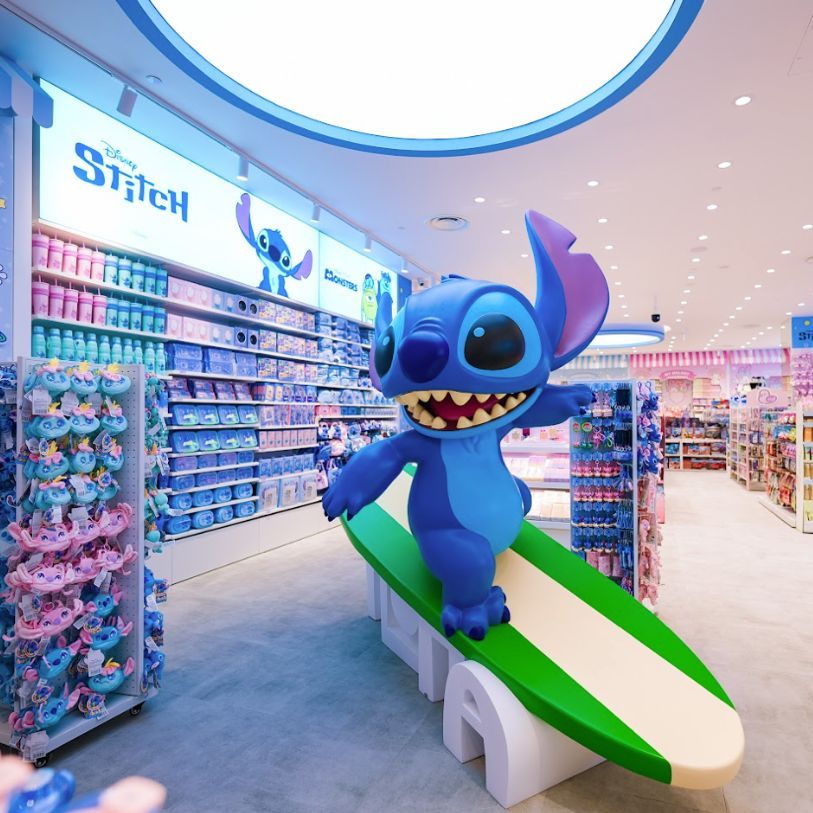
Finally, in consumer markets, Miniso rose 30% following accelerating sales and an upbeat profit outlook, a good result for a stock we promoted in our last quarterly report. Interestingly, however, Taurient’s “Thesis Validation” report flagged an important nuance: management’s strategic pivot away from a capital-light franchise model towards more capex-heavy, directly operated overseas stores. While Taurient flagged that this shift requires us to refine our thesis, we continue to view Miniso’s global IP expansion and brand momentum as compelling growth drivers. It does demonstrate, however, how vigilant Taurient is at keeping us on track on our investment theses.
Taurient: Expanding the Edge
Speaking of Taurient, we’ve continued to scale its capabilities, including:
Investing is our passion
We’re often asked why we wouldn’t license Taurient to others. For now, our answer is simple: Taurient exists to enhance our own edge.
Rest assured that investing in global stocks is what we love doing. It’s what we are passionate about, and what we spring out of bed at 5am to do (if you’re Arms) or stay up until 3am to focus on (if you’re Thomas). We live and breathe investing. As Aristotle said, “Pleasure in the job puts perfection in the work” and we can’t think of anything else from which we would derive more pleasure.